
A Two-Day Palm Springs Itinerary for a Short Stay
For a two-day Palm Springs stay, keep Day 1 compact around central Palm Springs and nearby midcentury neighbourhoods, then reserve Day 2 morning for one major outdoor activity—either a canyon hike or the Palm Springs Aerial Tramway—and keep the final afternoon flexible. Protect pool or recovery time, and compress the route when arrival time, transport, heat, mobility or energy reduces the usable sightseeing window.

48-hour planning blueprint
Use these blocks as a sequence, not a rigid timetable. Keep Day 1 geographically compact, give Day 2 one main outdoor commitment, and protect enough flexibility to absorb transfers, weather, waiting and recovery.
Compact city loop + recovery
- Central Palm Springs: about 1–2 hours for a compact downtown walk or selected central stops.
- Nearby midcentury neighbourhoods: about 1–1.5 hours for a limited architecture loop.
- Pool or recovery: about 2 hours or the remaining late-afternoon window.
One outdoor block + flexible finish
- Outdoor morning: choose one main canyon hike or the Palm Springs Aerial Tramway.
- Recovery and lunch: return toward central Palm Springs and reassess time and energy.
- Final afternoon: add only a nearby, easy-to-shorten activity when a comfortable window remains.
Decision rule: add another stop only when it fits without displacing a higher-priority experience, needed recovery, or reliable return and departure timing.
Treat the itinerary as a route framework rather than a guarantee that every block will fit. Arrival and departure times, lodging location, transport, desert heat, mobility and energy should change how much you include; keep nearby activities together and simplify the plan before sacrificing recovery time.
Table of Contents
Day 1: Downtown Palm Springs, Midcentury Neighbourhoods, and Pool Time
Keep Day 1 geographically compact: start in central Palm Springs, continue through a limited group of nearby midcentury neighbourhoods, then return for pool or recovery time.
The sequence below uses approximate planning windows rather than fixed attraction durations, so each block can expand or contract with your pace and available hours.

- Central Palm Springs — about 1–2 hours: use the first block for a compact downtown walk or a small number of central stops rather than spreading sightseeing across the city.
- Nearby midcentury neighbourhoods — about 1–1.5 hours: continue with a limited architecture loop before returning toward your accommodation. The Palm Springs Bureau of Tourism describes its broader self-guided midcentury architecture route as unsuitable for walking because of the distances involved, so a short Day 1 visit should select only a nearby portion rather than attempt the full route.
- Pool or recovery time — about 2 hours or the remaining late-afternoon window: return to your accommodation and preserve this block instead of filling it automatically with another cross-town stop.
Keep Downtown and Nearby Neighbourhoods in One Sightseeing Loop
Keep downtown Palm Springs and nearby midcentury neighbourhoods in one sightseeing loop so each transfer advances the route instead of sending you back across the same area.
Start with the central cluster, add only neighbourhood stops that fit naturally before the return to your accommodation, and treat any stop requiring a substantial detour as a separate itinerary choice.

- Proximity: favour neighbourhood stops close enough to extend the downtown route rather than creating a separate cross-town journey.
- Walking or driving transitions: group walkable central stops together, then use a deliberate driving or other transport transition for neighbourhoods that are impractical to reach on foot.
- Transport friction: exclude a stop when reaching it requires substantial backtracking, parking effort, or another transfer that outweighs its role in the compact loop.
- Dwell time: prefer stops that leave enough usable time for the remaining loop rather than allowing one neighbourhood visit to absorb the rest of the sightseeing window.
- Distinctiveness: include a neighbourhood when it adds a clearly different streetscape or midcentury architectural context instead of repeating what an earlier stop already provides.
Apply those criteria together rather than choosing neighbourhoods by name alone: proximity controls route length, transfer friction determines how much sightseeing time is lost between areas, and likely dwell time determines how many stops remain practical.
A nearby area that adds a distinct architectural setting can justify inclusion, while a similar stop requiring a separate detour can be left out.
This keeps more of Day 1 available for experiencing Palm Springs rather than retracing the route between sightseeing stops.
Day 2: An Outdoor Morning and a Flexible Final Afternoon
Use the morning of Day 2 for one substantial outdoor activity, then keep the later part of the day flexible rather than committing to another major excursion.
Starting with the most time- and energy-intensive block leaves the afternoon able to contract if the outdoor activity, weather, or transfers take longer than expected.

- Outdoor morning: complete one main outdoor experience while allowing enough time for its access, the activity itself, and the return transfer.
- Recovery and lunch: return toward central Palm Springs, eat, cool down, and reassess your energy and remaining trip time before adding another activity.
- Flexible final afternoon: choose a nearby, easy-to-shorten activity only if weather, comfort, transport, reservations, and departure timing leave a practical window.
The usable afternoon begins only after the outdoor block, return transfer, recovery, and lunch are accounted for, so its length is conditional rather than fixed.
Extend recovery and shorten the afternoon instead of compressing rest.
Reduce the optional afternoon window to protect the fixed commitment and return time.
Add a relaxed local activity with an easy return rather than another major excursion.
Contract the afternoon to a short central stop or downtime.
Choose One Main Outdoor Block: Canyon Hike or Aerial Tramway
For a two-day Palm Springs itinerary, choose either a canyon hike or the Palm Springs Aerial Tramway as Day 2's main outdoor block rather than assuming both will fit comfortably into one morning.
The comparison below separates trail time, physical exertion, heat exposure, access requirements, transport effort, and the experience each option provides.
The Andreas Canyon Loop is listed as an easy 1.2-mile (1.9 km) trail taking approximately one hour, while the Palm Springs Aerial Tramway specifies an approximately 10-minute ride each way; neither figure includes all travel, access, waiting or additional sightseeing time.

| Planning factor | Canyon hike | Palm Springs Aerial Tramway |
|---|---|---|
| Time demand | Andreas Canyon Loop: approximately 1 hour of hiking, plus travel, access and stops; a longer trail requires more time. | Approximately 20 minutes of round-trip tram riding, plus travel, parking, boarding or waiting time, and however long you spend at the Mountain Station. |
| Physical exertion | Walking is the main activity; effort changes with the selected trail, terrain, distance and elevation change. | The tram provides the main elevation gain; additional walking or hiking at the Mountain Station increases exertion. |
| Heat and weather | Desert-level hiking involves direct outdoor exposure, so current temperature, sun exposure and trail conditions can affect comfort and suitability. | The Mountain Station is at a substantially higher elevation than the desert floor, so conditions can differ; current mountain weather and tram operations should be checked before departure. |
| Access requirements | Access depends on the selected canyon, its current operating hours, admission requirements and trail conditions. | Access depends on current tram operations, ticket availability, boarding conditions and any weather-related restrictions. |
| Transport effort | Requires travel to the selected canyon entrance or trailhead; the burden depends on your starting point and transport method. | Requires travel to the Valley Station on Tram Way, followed by parking or drop-off and boarding. |
| Desired experience | Best suited to travellers prioritising walking through desert terrain and palm-oasis scenery. | Best suited to travellers prioritising an aerial ascent, elevated views and a mountain environment. |
Choose a short canyon hike when desert walking is the priority, current conditions support outdoor exertion, and the trail's travel and hiking time leave enough room for recovery.
Choose the tramway when the aerial ascent, elevated views and mountain setting better match your priorities, provided current operations and access fit the morning; its approximately 20 minutes of total riding time does not represent the duration of the complete visit.
Either option can consume more of Day 2 through transfers, waiting, longer exploration or changing conditions, so verify current access and weather before committing the remaining schedule.
Neither is a universal winner: choose according to available time, physical comfort, transport effort, current conditions and the experience you value most.
Adapt the Two-Day Route to Your Trip Constraints
Change the baseline two-day Palm Springs route only when a trip constraint materially reduces usable sightseeing time, increases transfer burden, or changes physical comfort.
The adjustment should simplify, compress, or reorder the existing sequence rather than add replacement activities that make the two-day plan more demanding.

- Lodging location
- Staying close to the day’s activity cluster reduces repeated transfers; accommodation farther away makes tighter geographic grouping more important.
- Transport access
- When transport is limited, visit fewer separate areas and keep deliberate transfers for stops that add enough value.
- Usable arrival hours
- When arrival and check-in leave less practical sightseeing time, compress Day 1 instead of carrying the full missed schedule into Day 2.
- Heat, mobility and energy
- Uncomfortable heat or reduced mobility or energy should shift the itinerary toward shorter activity blocks, more recovery, or less demanding stops.
- Fixed reservations
- Treat fixed bookings as non-movable time anchors. Arrange flexible sightseeing around them and drop lower-priority stops when transfers would consume too much of the remaining day.
For example, if arrival and check-in leave only a short usable period on Day 1, keep that evening to one nearby activity and downtime instead of transferring the omitted sightseeing wholesale to Day 2.
Reordering the route this way preserves the main Day 2 outdoor block while reducing the risk that one constraint turns both days into an overloaded schedule.
Late Arrival: Compress Day 1 Without Overloading Day 2
A late arrival should reduce the scope of Day 1 rather than push every missed activity into Day 2.
Protect arrival and check-in first, then keep only a realistic local activity if enough usable time remains after the required transfer.
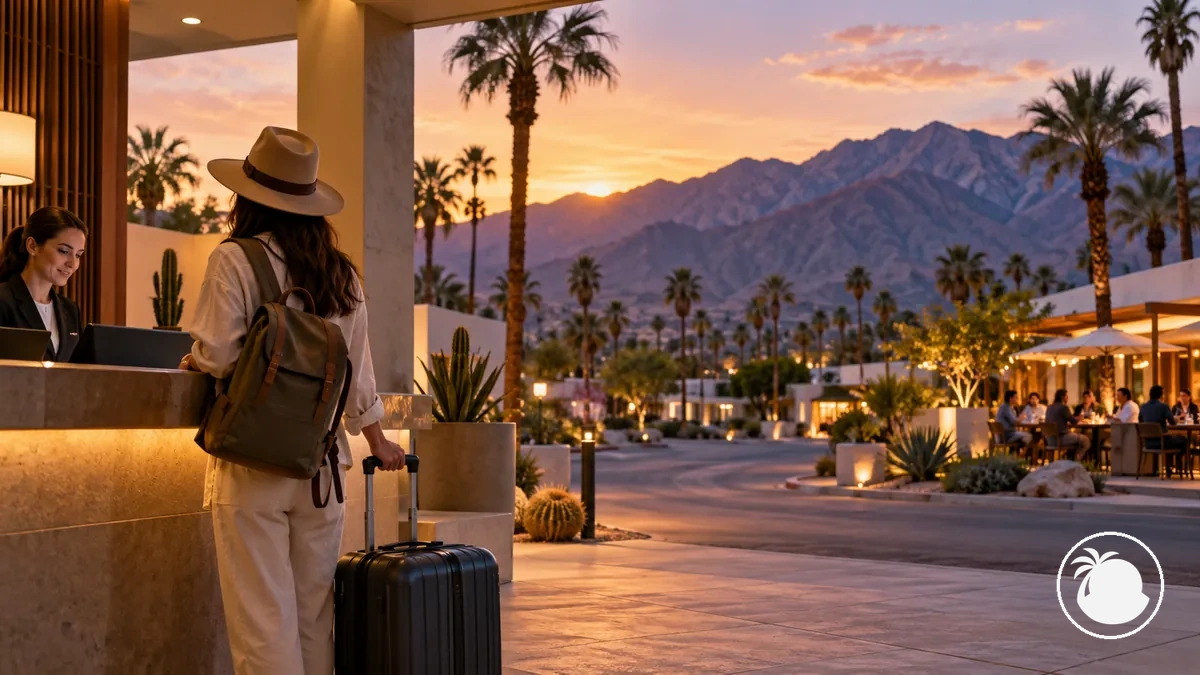
- Complete arrival and check-in first: treat these as required parts of the remaining Day 1 window rather than sightseeing time.
- Use the remaining hours selectively: keep one nearby activity only when its transfer and likely dwell time fit comfortably within the usable Day 1 window; otherwise use the remaining period for downtime.
- Rebalance rather than recover everything: defer only a high-priority missed activity that can fit naturally into the next day's route without displacing its main outdoor block.
Judge the degree of compression by the usable hours remaining after check-in, the transfer effort required for another stop, and the priority of that activity.
For example, an arrival that leaves little practical sightseeing time calls for greater compression than one that still leaves a comfortable local window; there is no universal clock-time cutoff because arrival, check-in and transfer conditions differ by trip.
Lower-priority Day 1 stops can therefore be omitted instead of accumulated as extra obligations.
This keeps Day 2 centred on its planned outdoor block rather than turning it into a recovery schedule for everything missed on arrival day.
Without a Car: Reduce Cross-Town Transfers
Without a car, keep the two-day Palm Springs itinerary concentrated around walkable central activities and reserve deliberate transport transfers for stops that cannot reasonably fit the central cluster.
Fewer separate transfer legs leave more of the short stay available for the activities themselves, while an outlying stop should justify the additional movement it adds.
- Walkability: group activities that can be reached comfortably on foot into the same sightseeing period rather than inserting a vehicle transfer between nearby central stops.
- Transfer frequency: reduce separate journeys by completing the central cluster before making a deliberate trip to an outlying activity.
- Distance from the central cluster: treat a location outside practical walking range as a separate transfer requirement rather than an automatic extension of the downtown route.
- Transport availability: keep an outlying activity only when a suitable transport option is available for both the outward and return journeys at the required times.
- Time lost to movement: drop or defer a stop when waiting and travel would consume enough of the available sightseeing window to undermine the value of visiting it.
Evaluate each location by whether it is walkable from the central activity cluster, how many extra transfers it creates, whether transport is available when needed, and how much usable itinerary time the journey consumes.
A practical route could concentrate downtown sightseeing into one continuous period, then use one deliberate transfer for the day's major outlying activity instead of alternating repeatedly between central and distant stops.
Because actual transport availability and journey times depend on the route, time of travel, starting point, and current service conditions, verify the required outward and return transport before committing to the outlying stop.
If that transfer is impractical, keep the schedule within the central cluster rather than adding multiple cross-town journeys.
What Two Days Can Cover and What to Skip
Two days in Palm Springs can reasonably cover a focused combination of central sightseeing, one major outdoor experience, and protected relaxation time.
It is not enough time to treat every worthwhile attraction or wider desert excursion as part of the same itinerary, so some options need to be deferred when they compete for the same limited time.
Keep or skip an activity according to how closely it matches your priorities, how much time and transfer effort it requires, and whether it adds a distinct experience.
Weather sensitivity can change the practical value of an outdoor activity, while several similar stops can create duplication without adding equivalent variety.
The criteria below organise priority fit, time demand, transfer burden, distinctiveness, weather sensitivity, duplication, and the effect each choice has on the rest of the itinerary.
| Choice | Time and transfer demand | Contextual value | Keep or skip implication |
|---|---|---|---|
| Central sightseeing | Lower transfer burden when activities are geographically clustered. | Supports architecture, culture, dining, or downtown exploration without repeatedly crossing the city. | Keep when it matches your interests; limit similar stops when they begin to duplicate the same experience. |
| One major outdoor experience | Requires a substantial activity block plus access and return time; weather can also affect practical scheduling. | Adds a distinct desert or mountain experience to the central sightseeing blocks. | Keep the outdoor option that best matches your priorities and current conditions rather than scheduling multiple major outdoor blocks. |
| Pool or recovery time | Uses itinerary time but can avoid the transfer burden of adding another separate attraction. | Provides a deliberate contrast to active sightseeing and protects downtime within the short stay. | Keep when relaxation is an important trip priority; shorten it only when another activity has greater personal value. |
| Distant or full-day excursion | Can consume a large share of a two-day stay through the excursion itself and the required transfers. | May be highly distinctive when the excursion is a primary reason for the trip. | Defer within this itinerary unless that experience is important enough to replace a substantial part of the Palm Springs-focused plan. |
| Additional similar stop | Adds dwell and transfer time to an already limited schedule. | Provides less incremental value when it substantially duplicates an experience already included. | Skip or defer when duplication outweighs its distinctiveness; keep it when that specific theme is a primary interest. |
A traveller prioritising architecture might keep an additional distinctive neighbourhood stop and reduce pool time, while a traveller prioritising relaxation could make the opposite choice and omit the extra sightseeing.
Activities that cannot fit without displacing a higher-priority experience, adding disproportionate transfers, or eliminating desired downtime are better candidates for a longer stay.
The two-day plan therefore works best as a selective Palm Springs itinerary rather than a compressed attempt to cover the entire destination and surrounding desert.
A shorter stay requires further prioritisation, while a longer stay creates room for deferred experiences; broader first-visit planning can consider those options separately without expanding this two-day route.