
A Three-Day Palm Springs Itinerary for a First Visit
Three days in Palm Springs can be enough for a balanced first visit when you plan around one main activity block per day: downtown on Day 1, the Palm Springs Aerial Tramway and mountain time on Day 2, and a flexible local block on Day 3. Arrival and departure windows, transport, pace, weather, and current operating conditions should shorten or reshape those blocks rather than force the same schedule into less usable time.

Three days at a glance
Keep the itinerary geographically coherent and give each day a clear priority. Expand a block only when the usable time, access, and pace support it.
- Day 1 Downtown Palm Springs Use the arrival window for a compact, walkable first block. Earlier arrival allows more exploration; later arrival means fewer nearby commitments.
- Day 2 Aerial Tramway + mountains Make the tramway and mountain time the anchor. Check current hours, tickets, closures, and weather, then add only a flexible activity if time and energy remain.
- Day 3 Flexible local activity Size the final block from the departure window, check-out, transport, and uncertainty. Keep it easy to shorten or skip.
Planning rule: when a constraint changes, shorten or replace an activity instead of stacking another major commitment onto the same three-day frame.
Geographic clustering protects activity time on a short stay, while weather, transport, mobility, and personal priorities determine how much of each block is practical.
Table of Contents
What Three Days in Palm Springs Can Realistically Cover
Three days in Palm Springs can reasonably include downtown time, one substantial nature experience, and flexible arrival and departure blocks when usable time allows. For a first visit, that is realistic coverage rather than comprehensive destination coverage.
What sets the activity load
- Usable time
- Late arrival or early departure reduces the first or final day's activity capacity; a calendar day is not automatically a full sightseeing day.
- Geographic clustering
- Keeping activities in coherent areas preserves more time for the visit instead of spending it moving between distant stops.
- Transport
- Access time and uncertainty affect how easily downtown and nature blocks can be combined, especially when a stop requires extra travel.
- Pace and activity duration
- Longer activities and a slower preferred pace leave less room for additional commitments, so the itinerary should scale down rather than become compressed.

With three largely usable days, the schedule can support fuller activity blocks; with a late arrival or early departure, the same three-day trip requires lighter coverage and more flexibility. A longer stay creates more room to separate priorities and maintain an unhurried pace.
Day 1: Arrive and Explore Downtown Palm Springs
On Day 1, arrival time should control how much you schedule, with downtown Palm Springs providing a geographically compact area for the first usable hours.
Keeping the arrival day focused on a walkable area reduces unnecessary movement and makes it easier to adjust the plan around check-in and the available hours.

An earlier arrival can support a longer downtown activity block, while a later arrival calls for fewer nearby activities and an earlier stopping point.
The sequence should therefore expand or shorten according to the first-day window rather than requiring a fixed amount of exploration.
- Arrive and complete check-in or other immediate arrival tasks before committing to activities.
- Orient to downtown Palm Springs and choose a compact route within the walkable area that fits the remaining available hours.
- Choose one nearby activity cluster and continue only while it fits the remaining time and preferred pace.
- Allow room for food or rest if needed rather than extending the activity block simply to fill the evening.
- Use a flexible evening as the stopping point; after a late arrival, shorten the sequence and keep only the highest-priority nearby activity.
Day 2: Build a Nature Day Around the Palm Springs Aerial Tramway
The Palm Springs Aerial Tramway should anchor Day 2 because its time requirement and current operating conditions shape how much of the rest of the nature day can fit around it.
Treat the tramway and mountain time as the main activity block, then fit lower-commitment plans around the return rather than giving them equal priority.
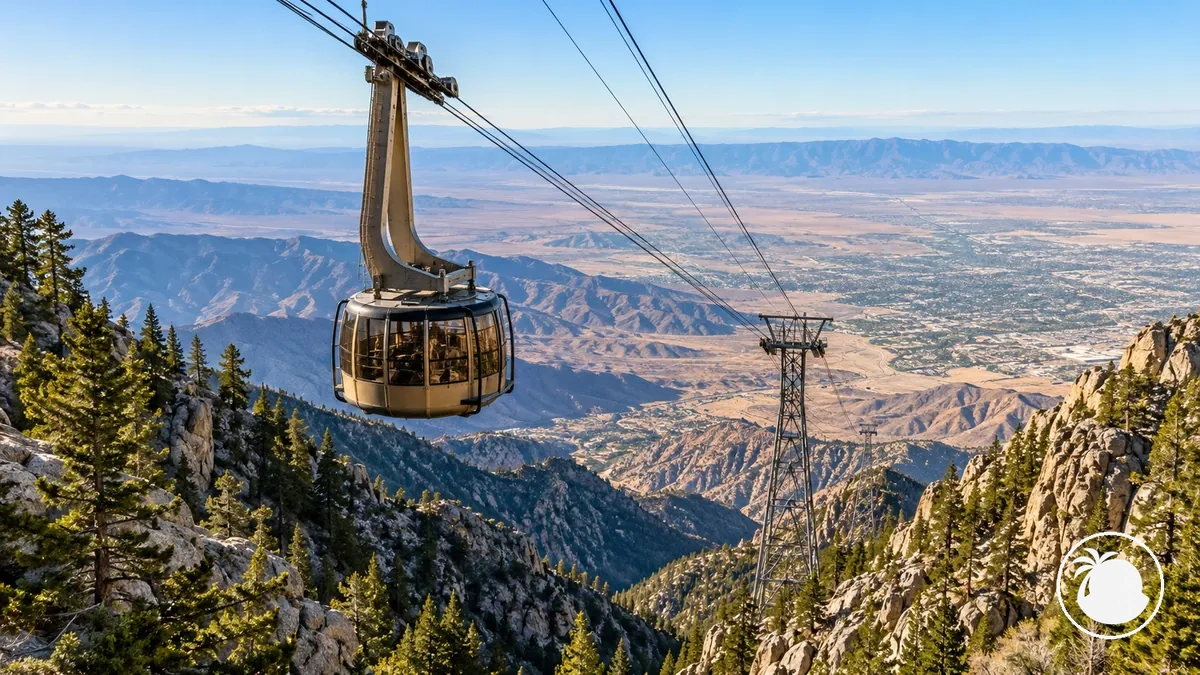
Before setting the sequence, check current operating hours, ticket information, closures, and weather for the tramway. Queues and conditions can change the practical time requirement, while the choice between a shorter scenic visit and a longer mountain or hiking block changes how much time remains after the return.
Pace also affects the depth of the visit, so avoid treating the total duration as fixed.
- Prepare the nature block by checking the current operating hours, ticket information, closures, and weather before committing the surrounding Day 2 schedule.
- Allow the Palm Springs Aerial Tramway visit to take priority over lower-commitment activities, adjusting the start or surrounding plans when current conditions or queues affect the schedule.
- Choose the depth of your mountain time according to the available day: keep the visit shorter for scenic exploration, or allow a larger block when hiking is part of the plan.
- Return before committing to the next activity and reassess the remaining time, energy, weather, and pace.
- If useful time remains, choose a flexible later activity that can be shortened or skipped; if conditions have extended the mountain visit, stop there and adjust the rest of Day 2.
Day 3: Keep the Final Day Flexible Before Departure
On Day 3, departure time should set the ceiling for your commitments because it determines how much available time can safely support a local activity.
Keep the final activity flexible and easy to shorten so the schedule retains a practical buffer before departure.

Match the final activity to the departure constraint
After check-out and departure preparation are accounted for, a longer local activity can fit if it still leaves a practical time margin.
Choose a low-commitment activity close to where you need to be next, or skip the activity if departure preparation already fills the remaining time.
As transport uncertainty or departure obligations increase, make the activity easier to shorten or abandon rather than relying on a fixed buffer.
The Day 3 buffer should therefore reflect the actual departure time, check-out needs, transport requirements, and uncertainty; there is no single fixed cut-off that suits every trip.
Adapt the Itinerary to Your Arrival Time and Trip Priorities
The same three-day itinerary should change when arrival time, departure time, pace, trip priorities, mobility, or transport materially changes what is feasible.
The adjustment should change how the three-day framework is allocated between downtown, nature, and other activity choices rather than increasing the total number of commitments.

With a fixed three-day frame, a changed constraint should lead to a changed priority and a substitution: replace or shorten an activity rather than stacking another major commitment onto the schedule.
Apply that rule to the constraint that actually affects execution:
- Arrival time and departure time: Less usable time favors shorter, lower-commitment activity blocks, while wider travel-day windows can support more of the base plan without adding extra activities.
- Pace: A slower pace favors fewer substantial activity blocks with more flexibility between them; a faster preferred pace can support more transitions only when the available time and other constraints still make them practical.
- Downtown versus nature priorities: If one matters more, give it the larger activity block and reduce or replace a lower-priority choice from the other context rather than trying to fit both at full scale.
- Mobility: When mobility limits which activities are practical, favor choices that better match the traveller's required level of access and replace activities that do not fit those needs rather than expanding the schedule.
- Transport: When reaching an activity adds uncertainty or a greater time cost, favor more reachable choices and use substitution to preserve the three-day frame.
If You Arrive Late or Leave Early
Travel-day changes should change the size of the activity block rather than compress the same sequence into fewer usable hours.

Shorten or move the first activity block and preserve the highest-priority nearby activity that still fits the actual arrival and transport timing.
Reduce or move the final activity block while preserving a practical departure margin. The remaining local activity depends on the actual departure time and transport requirements, not a fixed cut-off.
If You Are Visiting Without a Car
If you are visiting Palm Springs without a car, simplify the three-day itinerary around reachability and geographic clustering rather than assuming every planned activity should remain.
Use an access test for each activity
- Check reachability. Confirm whether walking, rideshare, a tour, or local transit is realistically available and suitable for that activity.
- Count the access cost. Extra travel effort uses time that would otherwise belong to the activity itself or to another trip priority; nearby stops are easier to cluster.
- Substitute when friction is disproportionate. Keep downtown and other practical combinations, and replace or deprioritize activities whose access cost makes them impractical within the three-day frame.
- Verify time-sensitive transport details. If the itinerary depends on rideshare, a tour, or local transit, check current availability and relevant details for the actual travel dates.
If You Want to Replace a Palm Springs Day With Joshua Tree
A Joshua Tree day trip should replace a Palm Springs day rather than be stacked onto an already full three-day itinerary.
Preserves more local Palm Springs coverage and avoids giving one of the three days to the excursion.
Adds the excursion but reduces local Palm Springs coverage. It requires enough usable time, suitable transport, and a pace that can support the day trip.
Choose the substitution when that trade-off matches your priorities and the required transport is practical; otherwise, keeping all three days local preserves more time in Palm Springs.