
Palm Springs vs Palm Desert: Choosing a Base for a Short Visit
Choose Palm Springs when your short visit is centred on downtown walkability, concentrated nightlife, Palm Springs-side attractions or shorter ground travel from Palm Springs International Airport (PSP). Choose Palm Desert when resort time, golf, El Paseo, a quieter pace and Palm Desert-side activities matter more and you are comfortable driving between more dispersed activities. The exact lodging location can override the city-level pattern, especially when your itinerary is spread across the Coachella Valley.
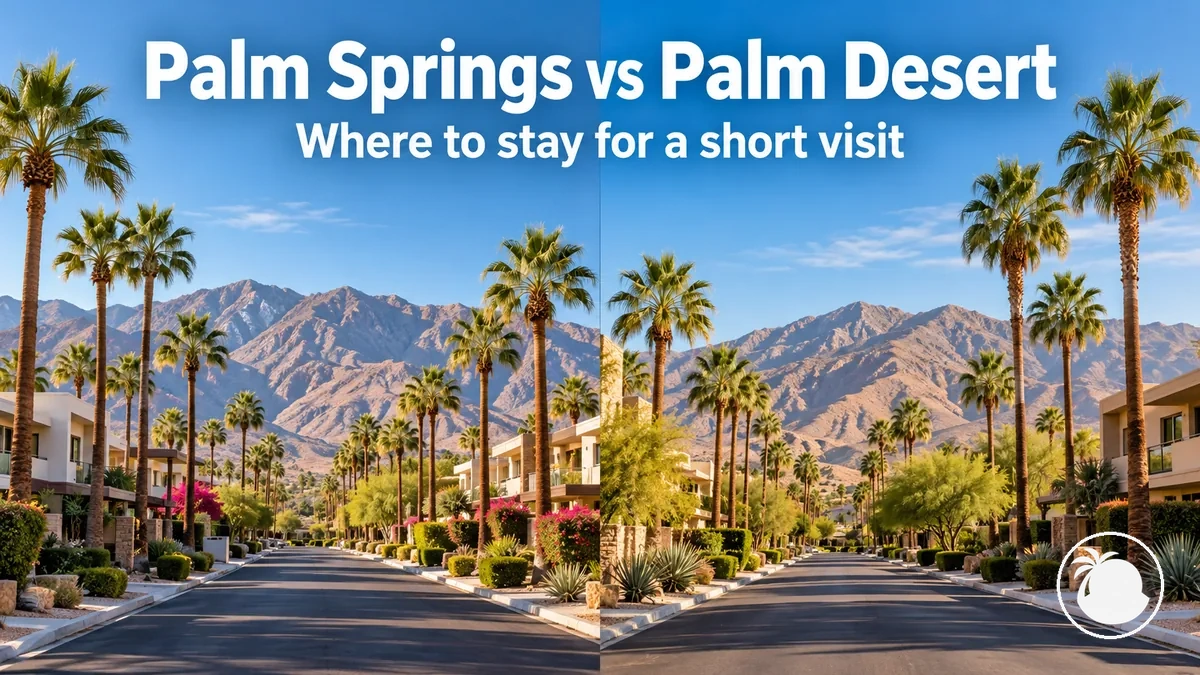
Which base fits your short visit?
Match the part of the trip that matters most to the base that reduces friction for that priority.
- Downtown walkability
- Palm Springs — a central stay can concentrate dining, shopping and visitor activity.
- PSP airport proximity
- Palm Springs — the airport is in Palm Springs, reducing ground distance for many city-centred stays.
- Concentrated nightlife
- Palm Springs — downtown places more evening options in one visitor district.
- Resort downtime
- Palm Desert — resort-oriented areas, golf and country-club settings support a quieter leisure pattern.
- Golf and El Paseo
- Palm Desert — staying on this side of the valley can reduce backtracking for these priorities.
- Valley-wide itinerary
- Either city — stay closer to the activities that will occupy most of the visit and expect motorised travel between dispersed areas.
This is a base-selection guide, not a ranking of the destinations. Neighbourhood, season, heat, traffic and the specific property can change the practical fit.
For mixed priorities, the most useful rule is to minimise repeated cross-valley travel: choose the base closest to the activities you expect to use most, then judge walkability from the specific accommodation rather than the city name alone.
Table of Contents
Walkability and Transport Trade-Offs
Palm Springs and Palm Desert create different mobility patterns for a short stay: a well-located Palm Springs base can concentrate more visitor activity around downtown, while a Palm Desert stay may place more planned destinations beyond the immediate lodging area.
In either city, walkability and short-stay convenience depend on the lodging location and the activities a visitor intends to reach.
The comparison below separates central-area mobility from valley-wide mobility because nearby dining and pedestrian access create a different transport need from dispersed attractions or cross-city movement.
| Mobility criterion | Palm Springs | Palm Desert | Short-stay implication |
|---|---|---|---|
| Central-area walkability | A downtown lodging location can put dining, shopping and visitor activity within a more concentrated area. | A well-located stay can provide pedestrian access to nearby dining and shopping, but convenience depends on the specific resort or neighbourhood. | Central lodging can reduce the need for motorised local trips in either city. |
| Car dependence | Car dependence increases when plans extend beyond downtown and other nearby activity clusters. | Car dependence increases when the stay and planned destinations are dispersed across Palm Desert or the wider valley. | A broader activity pattern increases the practical value of driving, rideshare or other motorised transport. |
| Cross-city movement | Trips to Palm Desert or other valley destinations require motorised travel rather than relying on downtown walkability. | Trips to Palm Springs or other valley destinations likewise require motorised travel. | Frequent cross-city trips reduce the convenience advantage of choosing a base primarily for local walkability. |
| Transport flexibility | A central base can support walking for nearby activities while rideshare or a car covers dispersed destinations. | Walking may cover activities near the lodging location, while rideshare or a car provides access to more dispersed destinations. | Combining walking with motorised transport provides more flexibility when a short visit includes both local and valley-wide activities. |
Heat, traffic, distance and the exact lodging location can change the practical balance: higher heat can make an otherwise walkable trip less comfortable, while traffic can increase travel time for cross-city movement.
For base selection, the useful distinction is therefore not simply Palm Springs versus Palm Desert, but whether the planned activity pattern is concentrated near the accommodation or spread across the valley.
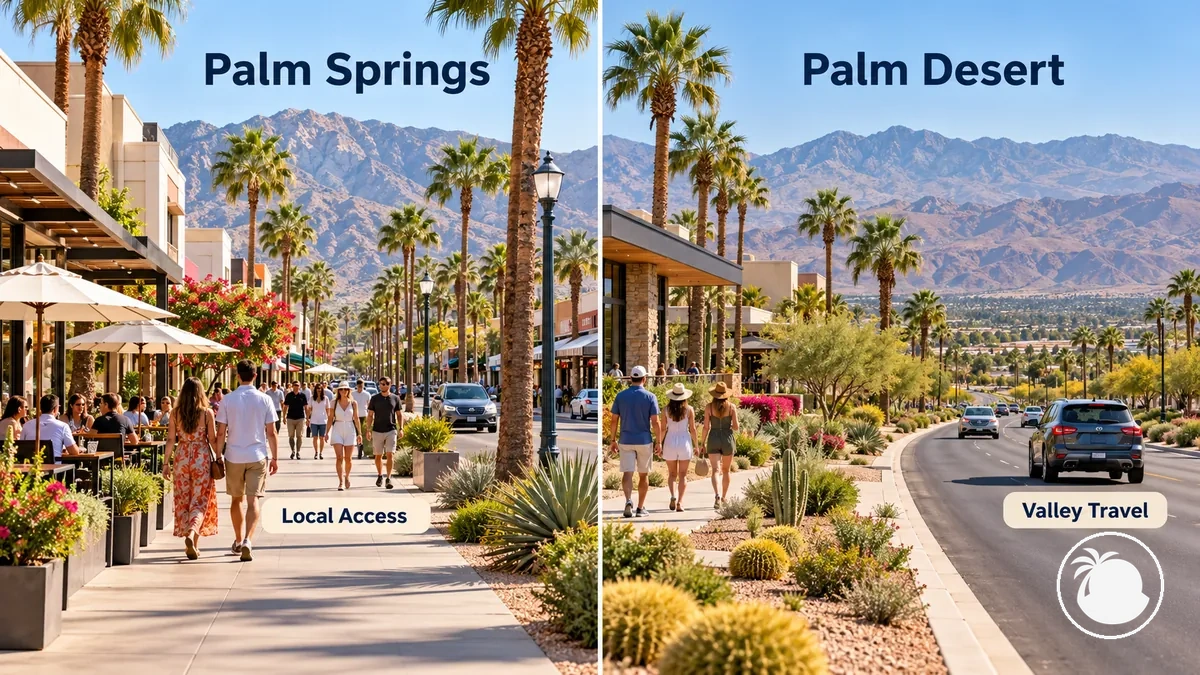
The section image illustrates the physical context for local pedestrian access and wider road travel between activity areas.
Walkability and Staying Without a Car
Staying without a car can be practical for a short stay when the lodging location is close to the activities a visitor expects to use most, but it becomes less convenient when the itinerary includes dispersed attractions or cross-valley trips.
Downtown Palm Springs can support more walking to nearby dining and visitor activity from a central location, while a Palm Desert stay depends more heavily on the location of the accommodation and planned destinations.
For a car-free stay, the useful test is whether everyday activities are reachable through walkability, local transit or rideshare without turning most outings into separate motorised trips.
The practical limits become more important when heat, longer walking distances or dispersed destinations make pedestrian access less useful.
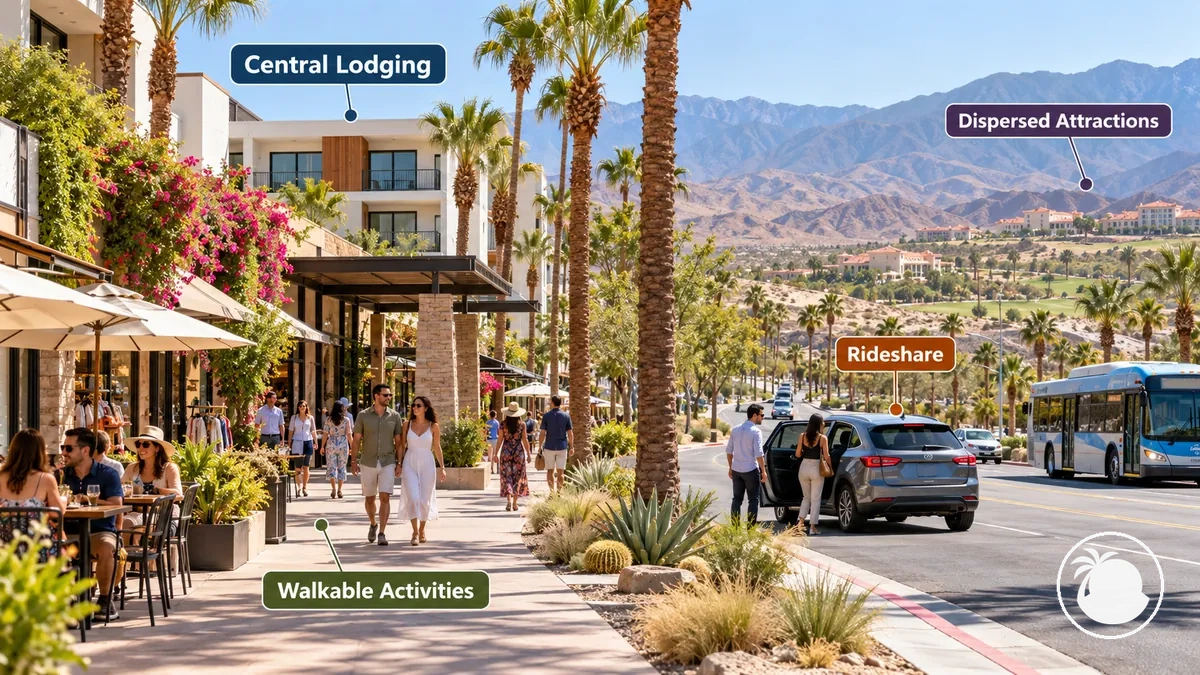
- Central lodging: Staying near downtown Palm Springs can make nearby dining, shopping and visitor activity accessible on foot, reducing reliance on motorised transport for local outings.
- Walkable dining and entertainment: A lodging location close to the places a visitor plans to use can make staying without a car more workable in either Palm Springs or Palm Desert.
- Rideshare or local transit: These options can supplement walking when a destination lies beyond the immediate lodging area, although their usefulness depends on the specific trip and transport availability.
- Dispersed attractions: A short stay focused on attractions or activities spread across Palm Springs, Palm Desert or the wider valley requires more motorised trips, reducing the practical advantage of a car-free base.
The section image contrasts pedestrian access from a central base with the wider travel needed for a valley-wide sightseeing pattern.
Distance Between the Cities and Airport Proximity
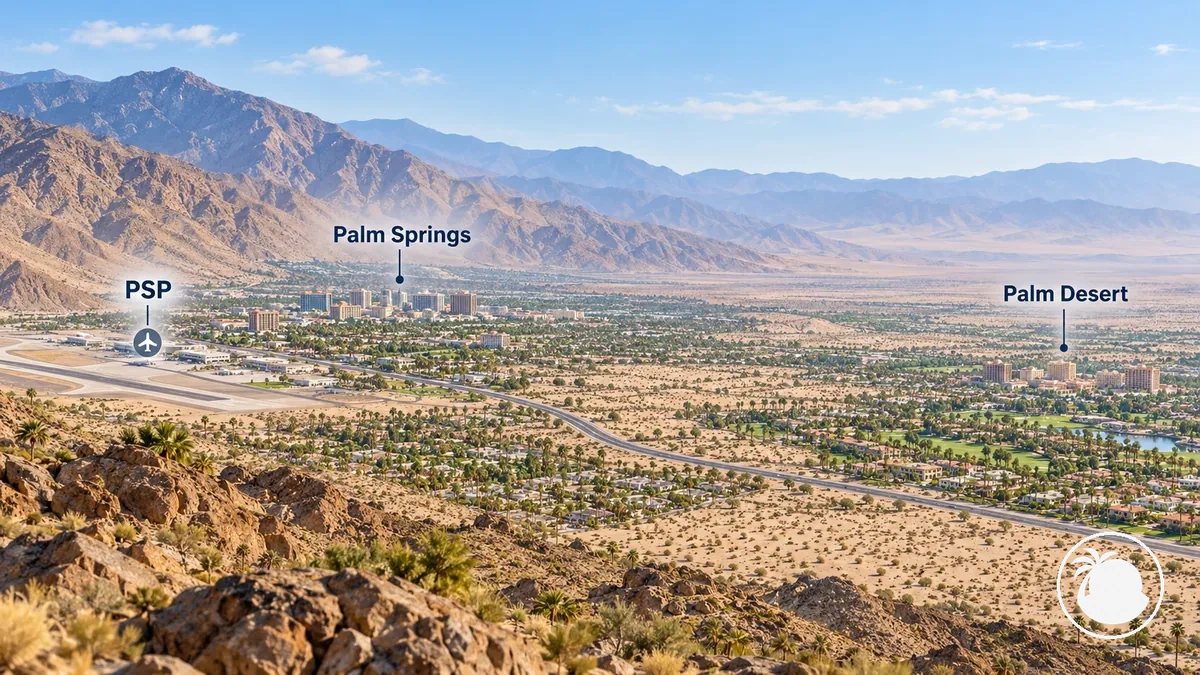
Palm Springs has the airport-proximity advantage for a short stay using Palm Springs International Airport (PSP), while Palm Desert lies farther east and adds cross-valley movement for many airport trips.
Distance at a glance
- PSP to downtown Palm Springs
- 2 miles (3.2 km)
- Palm Springs to Palm Desert
- about 14 miles (23 km) by road
- What changes travel time
- Exact origin and destination, route, and traffic.
Geographic distance is comparatively stable, but drive time is condition-dependent, so mileage should not be treated as a fixed transfer time. For base selection, Palm Springs generally reduces the ground distance associated with a PSP arrival or departure, while the practical difference still depends on the specific lodging location and traffic at the time of travel.
The section image shows the relative geographic relationship between PSP, Palm Springs and Palm Desert without implying a fixed journey time.
Access to Attractions and Visitor Areas
Attraction access depends mainly on where the itinerary is concentrated: a Palm Springs base is more convenient for visitor areas clustered around downtown and the western side of the valley, while a Palm Desert base is more convenient for visitor areas centred farther east.
The comparison is about geography and access burden rather than the quality or importance of the attractions.
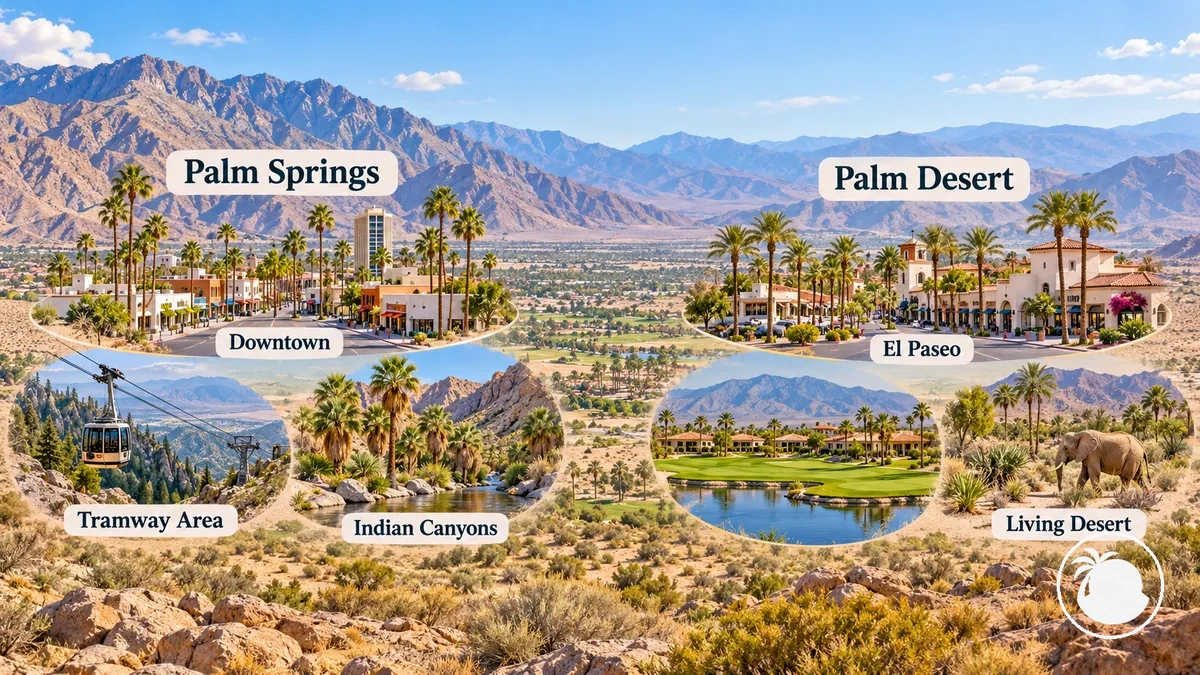
Representative clusters make the trade-off clearer.
Downtown Palm Springs provides local access to its central visitor area, while the Aerial Tramway area and Indian Canyons are separate destinations that typically require a short ride from a Palm Springs lodging location; from Palm Desert, reaching these Palm Springs-side activities involves a longer cross-valley trip.
In Palm Desert, El Paseo and nearby resort areas form a local visitor zone, while golf areas and The Living Desert area are more naturally grouped with a Palm Desert-based activity pattern.
Many activities across Greater Palm Springs still require motorised travel from either base because visitor areas and attraction clusters are dispersed across the valley.
The two groups below organise representative visitor areas by base convenience, not attraction quality, and show how concentrating chosen activities near the lodging location can reduce unnecessary backtracking during a short stay.
- Palm Springs — downtown: A centrally located base can place the downtown visitor area within local or potentially walkable access, depending on the exact lodging location.
- Palm Springs — Aerial Tramway area and Indian Canyons: These are separate attraction areas from downtown, so a Palm Springs base can reduce cross-valley movement even when a short local ride is still needed.
- Palm Desert — El Paseo and resort areas: A well-positioned Palm Desert base can keep these visitor zones local, with the exact access burden determined by the lodging location.
- Palm Desert — golf and The Living Desert area: Visitors prioritising these activity clusters can reduce backtracking by staying on the Palm Desert side rather than repeatedly travelling cross-valley from Palm Springs.
Resort Setting, Atmosphere, and Nightlife
Palm Springs tends to offer a more concentrated, lively visitor atmosphere around its downtown energy, while Palm Desert tends to offer a calmer stay experience shaped more by resort concentration, golf and country clubs.
These are relative tendencies rather than fixed identities, and the practical fit depends on the neighbourhood, resort and visitor priorities.
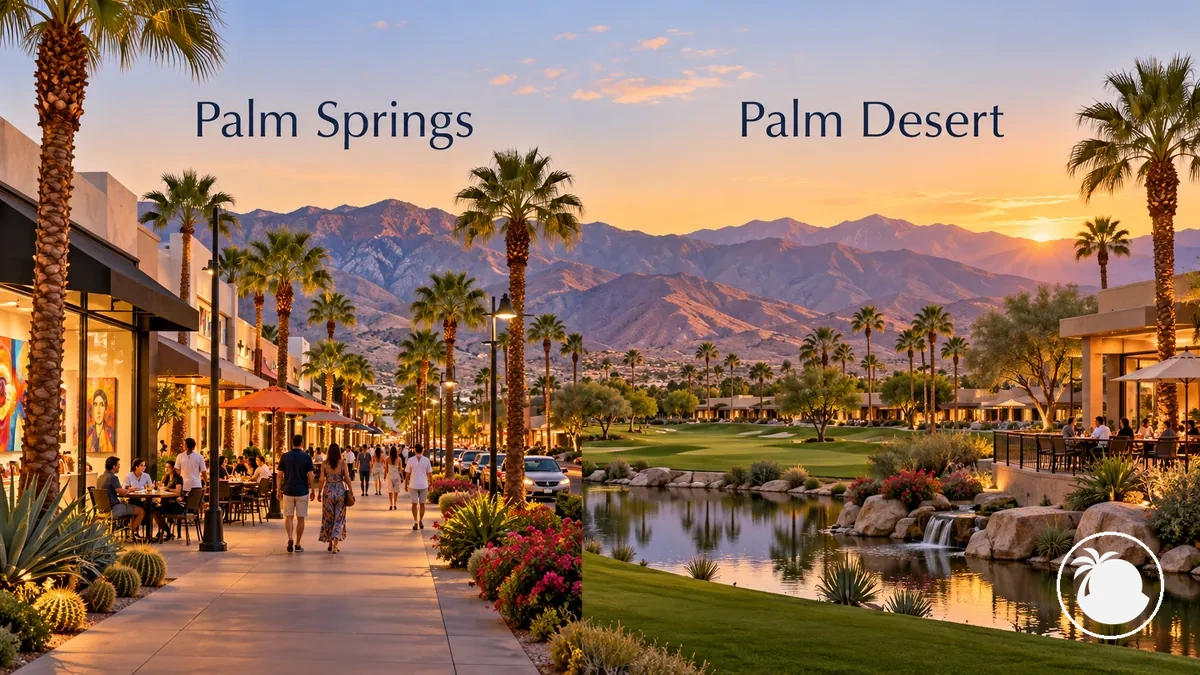
How the stay experience differs
Palm Springs
Dining, arts and evening activity are more concentrated around downtown, so a central property can combine a resort stay with a more pedestrian-oriented visitor district.
Palm Desert
Resort areas, golf, country clubs and El Paseo form more distributed leisure clusters, which can place greater emphasis on landscaped settings, privacy and a quieter pace.
Key boundary: these are city-level tendencies, not guarantees. A secluded Palm Springs resort can feel quieter than a centrally located Palm Desert property, so the exact accommodation location remains decisive.
Evening activity and resort character are separated below because nightlife concentration and the day-to-day pace of a resort stay affect the base decision in different ways.
Evening Activity and Nightlife
Palm Springs generally offers a more concentrated nightlife and evening activity pattern around downtown, while Palm Desert offers bars, lounges and dining in a quieter, more dispersed setting.
For a short stay, that difference matters most when active evenings and convenient access to multiple night-time options are priorities.
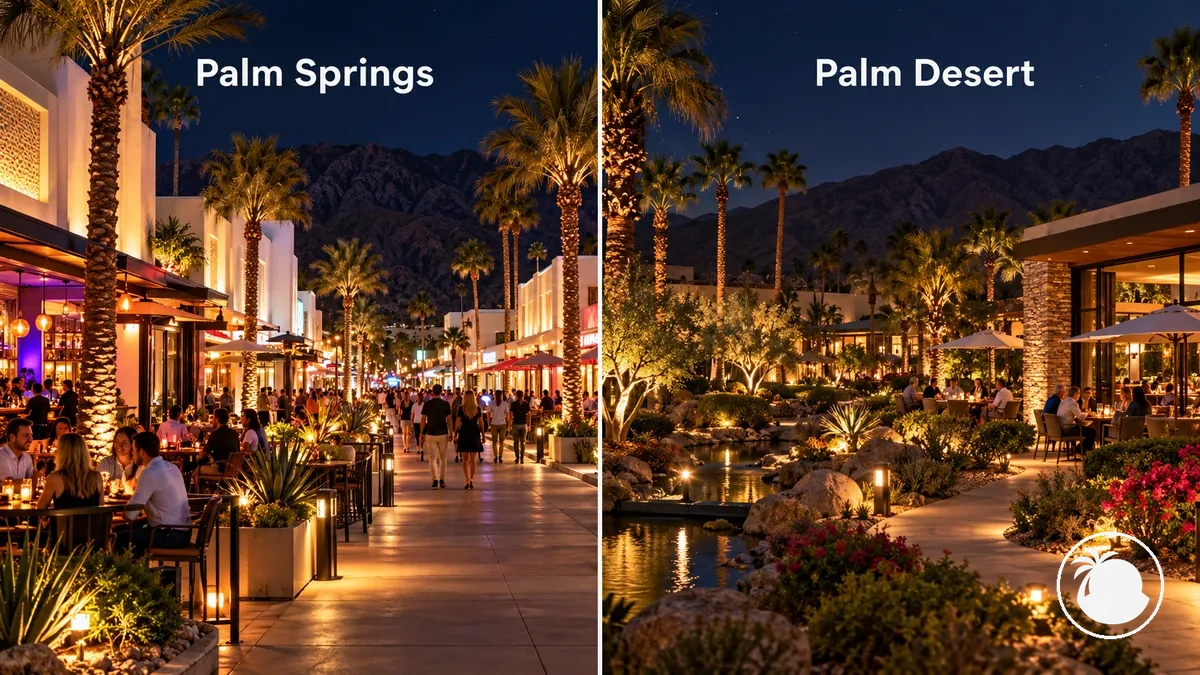
Nightlife can also affect the return to accommodation: staying close to the evening activity a visitor prefers can reduce the need for transport after dark, while a more dispersed plan can increase reliance on rideshare or other motorised transport.
Noise preference matters as well, so proximity to concentrated evening activity may be convenient for one visitor but less suitable for someone prioritising a quieter night-time setting.
- Venue concentration: Downtown Palm Springs tends to place more restaurants, bars and lounges within a concentrated visitor area, while Palm Desert evening options are more dispersed across dining and resort-oriented areas.
- Evening style: Palm Springs tends toward a livelier central evening scene, while Palm Desert can suit visitors who prefer quieter evenings around dining, lounges and resort areas.
- Late dining: Both cities can provide evening dining, but availability varies by establishment and date, so a short stay should not assume fixed late-night hours.
- Transport and noise: Visitors prioritising active evenings may value accommodation near their preferred nightlife cluster, while those prioritising lower evening noise may prefer lodging set apart from concentrated activity; transport after dark becomes more relevant when the accommodation and chosen venues are dispersed.
Resort Character and Overall Pace
Palm Springs tends to combine resort accommodation with a more urban visitor pattern around downtown, where a central property can place shopping, dining and pedestrian activity closer together. Palm Desert has a stronger concentration of landscaped resort, golf and country-club settings, with El Paseo and other activity areas forming separate clusters.
For a short stay, the practical distinction is what sits within easy reach of the accommodation: a central Palm Springs stay can make downtown activity more immediate, while a Palm Desert stay near resort, shopping or golf areas can keep a leisure-focused itinerary closer to the property.
Resort character, privacy and pace still vary by individual neighbourhood and property, so the specific location matters more than the city label alone.
Choosing a Base by Short-Visit Priorities
The more practical base depends on which short-visit priorities carry the most weight, not on a universal ranking of Palm Springs and Palm Desert.
Palm Springs tends to fit convenience-first priorities such as central walkability, airport access and concentrated visitor activity, while Palm Desert can fit resort-experience-first priorities such as resort seclusion, golf, shopping around El Paseo and spending more time near the accommodation.
The criteria below prioritise the constraints most likely to affect a short stay, beginning with walkability and willingness to drive, then activity geography and airport access, before considering nightlife and resort-oriented preferences.
Each criterion links a visitor condition to its practical base implication, so the choice can change when the priority changes.
- Walkability and willingness to drive: If reducing routine driving and keeping dining, shopping and visitor activity close to the accommodation are high priorities, a well-located Palm Springs base generally has the stronger fit; if driving between planned activities is acceptable, the distinction becomes less important.
- Activity geography and first-time sightseeing: If a short visit concentrates on downtown Palm Springs and Palm Springs-side attractions, staying in Palm Springs reduces cross-valley movement. If planned activities concentrate around Palm Desert, El Paseo, golf or nearby resort areas, Palm Desert becomes the more practical base.
- Airport access: If minimising ground travel around arrival or departure at Palm Springs International Airport is a major priority, Palm Springs has the geographic advantage because PSP is located within Palm Springs; if airport proximity carries little weight, other priorities can determine the base.
- Nightlife and active evenings: If concentrated nightlife, bars, lounges and downtown evening activity matter to the short stay, Palm Springs generally offers the more convenient pattern. If nightlife is secondary and a quieter, more dispersed evening pattern is acceptable, Palm Desert remains suitable.
- Resort seclusion and resort time: If the visit is designed around substantial time at the accommodation, privacy and a resort-oriented setting, Palm Desert can align more closely with those priorities, although the experience still varies by individual property and neighbourhood.
- Golf and shopping: If golf-oriented areas and shopping around El Paseo form a large part of the visit, Palm Desert can reduce unnecessary travel between the base and those activities; if those activities are incidental, they should carry less weight in the decision.
A visitor prioritising walkability, a Palm Springs-focused first visit and convenient airport access may therefore favour Palm Springs, while someone prioritising resort time, golf and El Paseo-oriented shopping may favour Palm Desert even with greater willingness to drive.
Mixed priorities require a trade-off: for example, resort seclusion may outweigh downtown convenience when most of the short stay is intended to be spent at the property.
The next step is to place the chosen base within a practical three-day plan without changing the base-selection criteria established here.
Palm Springs for First-Time and Downtown-Focused Visits
Palm Springs may be the more practical base for a first-time visitor whose short stay is centred on downtown, especially when walkability and concentrated visitor activity matter.
A central lodging location can place dining, shopping and downtown activity closer together while keeping Palm Springs-focused attractions, nightlife and airport access on the same side of the valley.
- Downtown-focused first visit: If the priority is walking between nearby dining, shopping and visitor activity, Palm Springs may fit when the lodging location is close to downtown.
- Palm Springs attractions and evenings: If the short stay concentrates on Palm Springs-focused attractions during the day and downtown nightlife in the evening, a Palm Springs base can reduce repeated cross-valley travel.
- Airport-sensitive short stay: If convenient airport access matters because arrival or departure takes a meaningful share of a short visit, staying in Palm Springs can reduce the ground-travel burden associated with using Palm Springs International Airport.
The recommendation changes when the lodging location is outside the central area or the activity pattern includes substantial time in Palm Desert or elsewhere in the valley, because Palm Springs walkability does not make dispersed attractions walkable.
The exact lodging location therefore remains important when judging downtown access and visitor convenience, and Palm Springs should not be treated as the automatic choice for every first-time visitor.
Palm Desert for Resort-Focused and Quieter Visits
Palm Desert may suit a resort-focused short stay when the visitor expects to spend substantial resort time and prefers a quieter stay centred on leisure rather than concentrated downtown activity.
Its resort-oriented areas, golf and Palm Desert-focused amenities can make that stay environment practical when those priorities outweigh the convenience of being closer to central Palm Springs.
- Resort downtime: If substantial resort time and a calmer pace are priorities, Palm Desert may suit a visitor whose chosen lodging location provides the preferred resort setting without requiring frequent trips elsewhere.
- Golf or El Paseo-area activity: If the short stay concentrates on golf or shopping and dining around El Paseo, a Palm Desert base can place those activities closer to the visitor's accommodation and reduce unnecessary cross-valley travel.
- Quieter base with more driving: If a visitor values a resort-oriented stay environment more than minimising every journey, accepting additional driving for activities elsewhere in the valley may be a reasonable trade-off.
The base decision therefore depends on how resort time, golf, El Paseo-oriented shopping and dining, and willingness to drive fit the actual activity pattern.
Palm Desert may require more driving when planned activities are concentrated elsewhere in the valley, and an airport transfer involving Palm Springs International Airport can involve more ground travel than a Palm Springs base.
That mobility trade-off can be worthwhile when the visitor's higher priority is the Palm Desert stay environment, but its practical effect still depends on the exact lodging location and planned destinations.